
Every summer, the same question makes the rounds on travel forums and group chats: Greece or Portugal?
The answer, for anyone who has actually done both, is almost always the Algarve. Not because the Greek islands aren’t spectacular, but because southern Portugal offers something that’s hard to find anywhere else in Europe: beaches with real quality, a food scene that now holds seven Michelin stars, consistently affordable prices, and a level of safety that parents of young children actually notice.
The numbers back this up. The Algarve has now won Best Summer Destination at the Irish Travel Industry Awards four times, beating out destinations like the Costa del Sol, Lanzarote, and the Greek mainland. The World Travel Awards named it World’s Leading Beach Destination in 2025 for the fourth time as well. These are not consolation prizes. The infrastructure has improved, the restaurant scene has matured, and the coastline has stayed intact.
But awards aside, the real question is practical: how do you actually do the Algarve well? Where do you stay? Which beaches justify the hype? And what separates a forgettable package holiday from a trip you’ll talk about for years? This guide breaks all of it down.
Over 300 Days of Sunshine: What the Climate Actually Means for Your Trip
The Algarve’s climate is the main reason people keep coming back. With more than 300 days of sunshine per year and summer temperatures that reliably sit between 28°C and 30°C (82°F-86°F), it’s one of the sunniest corners of Europe. Rainfall between June and September is usually zero.
But here’s the detail most guides gloss over: the Algarve’s coastline runs roughly east to west, not north to south, which means there’s a meaningful difference between the south-facing beaches (warmer, calmer, more sheltered) and the west coast (cooler Atlantic breeze, bigger swells, wilder landscape). The eastern Algarve, around Tavira and the Ria Formosa lagoon, tends to be a few degrees warmer than the western stretches near Sagres.
Sea temperatures average 19-23°C (66-73°F) in summer, warmest in August. That’s cooler than the eastern Mediterranean, but warmer than you’d expect from the Atlantic. The sheltered bays and lagoons of the Ria Formosa natural park warm up faster than the open coast, making them excellent for families with young swimmers.
| Month | Avg. High | Rain Days | Sea Temp | Crowd Level |
| June | 27°C (80°F) | 1 | 19-20°C (66-68°F) | Moderate |
| July | 30°C (86°F) | 0 | 20-22°C (68-72°F) | High |
| August | 30°C (86°F) | 0 | 21-23°C (70-73°F) | Peak |
| September | 27°C (80°F) | 1 | 21-22°C (70-72°F) | High |
Source: Portuguese Institute for Sea and Atmosphere (IPMA). Crowd levels are editorial estimates based on occupancy data.
The takeaway: June and September are the sweet spot for travelers who want warm weather without the August crush. Couples and anyone not tied to school calendars should target these shoulder months deliberately. If you have school-aged children, book early. The best properties sell out weeks in advance for July and August.
The Beaches: From Iconic Cliffs to Hidden Coves
The Algarve stretches roughly 200 kilometers from the Spanish border to Cabo de São Vicente, Europe’s southwestern tip. Over that distance, you’ll find beaches that range from wide, family-friendly sands backed by golden cliffs to remote coves accessible only by boat. The variety is what sets it apart from single-note beach destinations.
Praia da Marinha
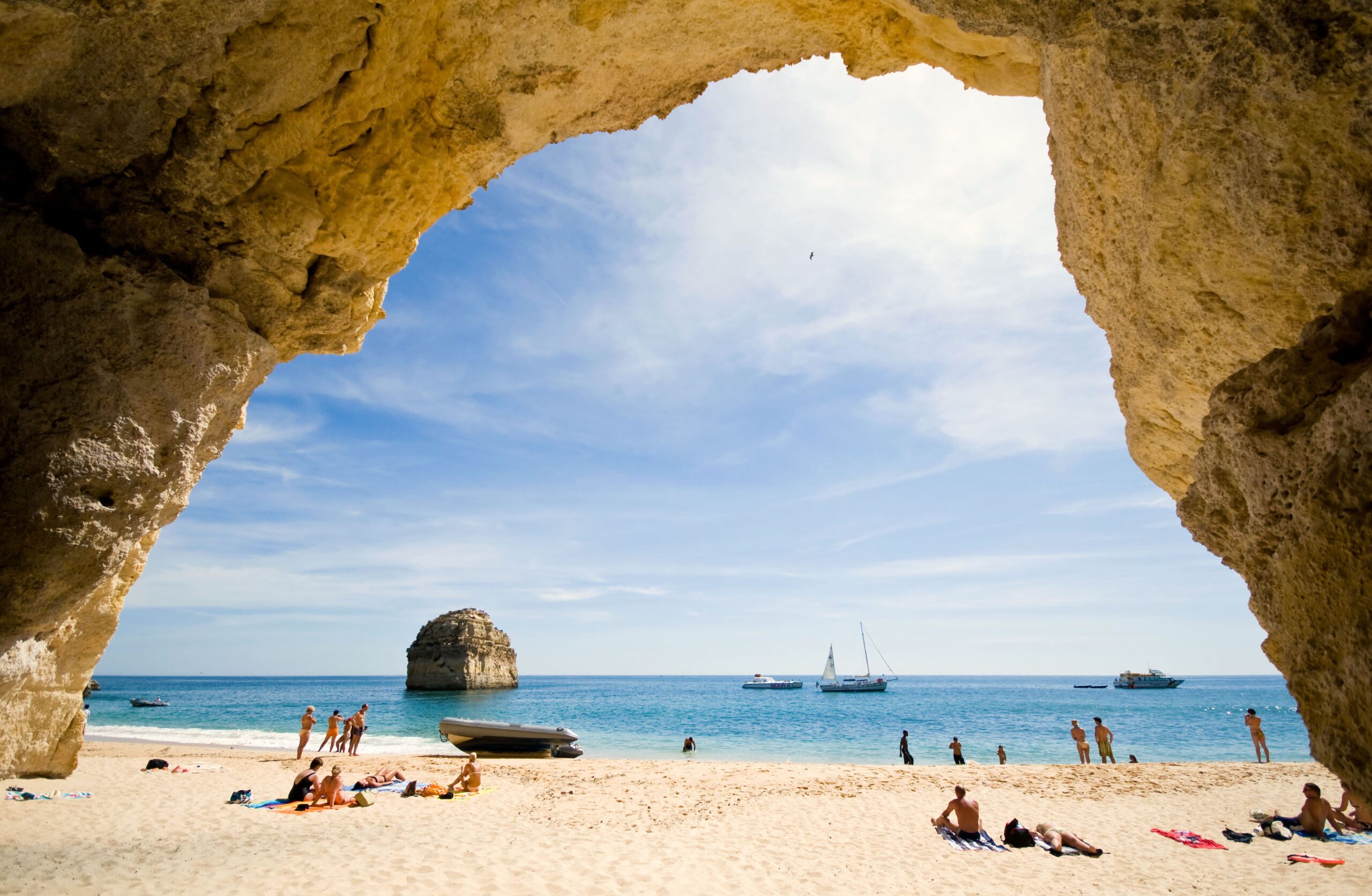
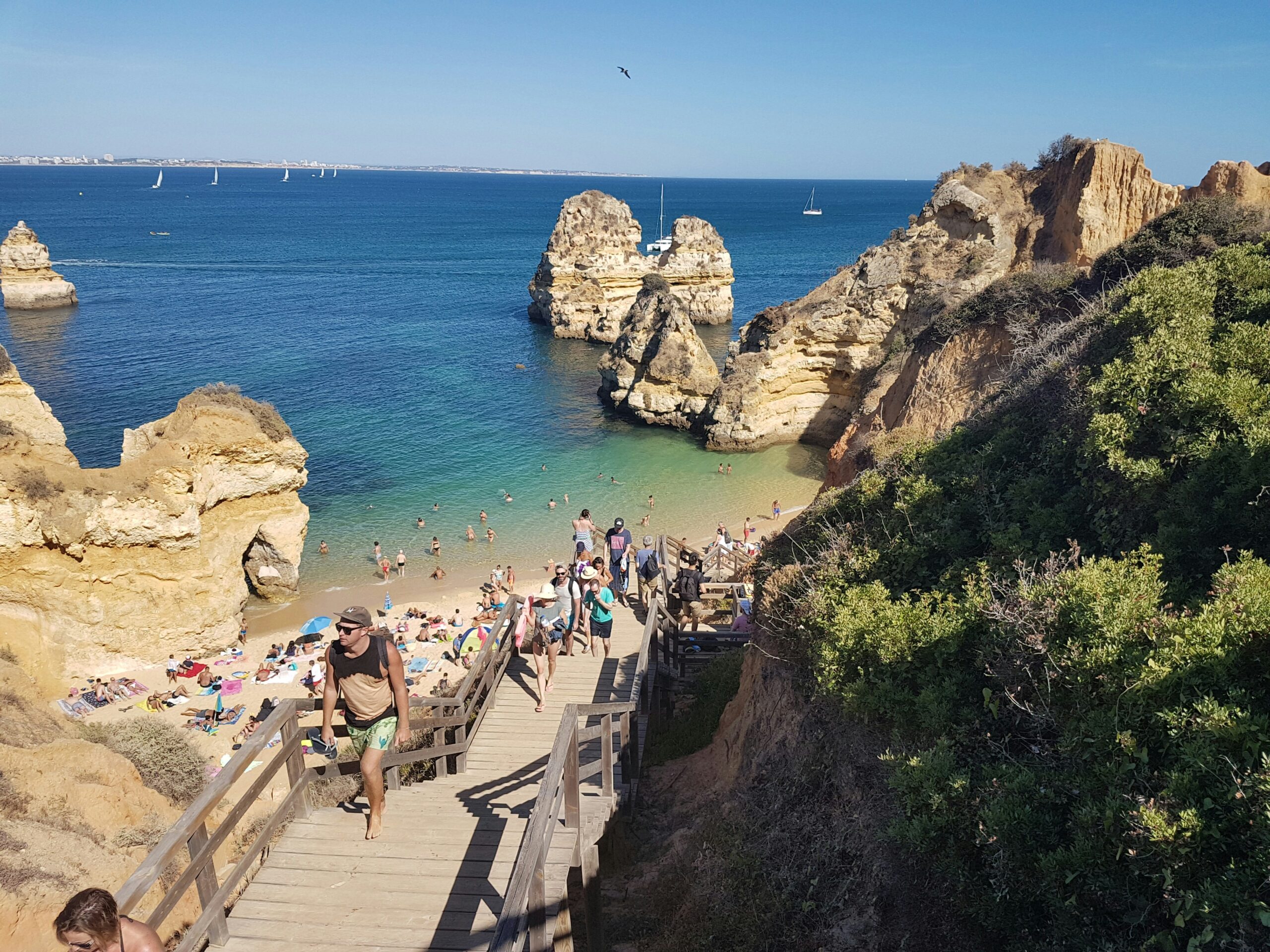
Praia da Marinha is the image on every Algarve postcard, and it earns it. Towering limestone arches, turquoise water, and a relatively steep staircase that filters out casual visitors. It’s spectacular for photography and snorkeling, though not ideal for very young children because of the rocky entry. Arrive before 10 a.m. in July and August to claim a spot.
Praia dos Três Irmãos and Praia do Alvor
At the western edge of Alvor, the coastline shifts from dramatic cliffs to a long, sweeping beach that extends toward the Alvor estuary. Praia do Alvor is wide enough to absorb summer crowds without feeling oppressive, and the shallow waters and boardwalk access make it excellent for families. The dunes behind the beach are part of a protected ecosystem, so don’t expect development here. That’s a good thing. If you’re staying at one of the Pestana hotels in Alvor, these beaches are within walking distance.
Praia da Falésia
The longest continuous beach in the Algarve, Falésia runs for roughly six kilometers beneath cliffs that glow orange and red in the afternoon light. It’s striking, and the sheer length means you can always find space, even in peak season. Access points exist at both the eastern (Vilamoura) and western (Olhos de Água) ends.
Benagil Sea Cave
Benagil is the Algarve’s most photographed natural formation: a sea cave with a collapsed ceiling that lets sunlight pour onto a small interior beach. You can reach it by kayak, paddleboard, or boat tour from the beach above. It’s worth seeing, but be aware that in peak summer the cave gets congested with kayaks and tour boats. Early morning departures (before 9 a.m.) are strongly recommended.
The West Coast: Costa Vicentina
North of Sagres, the coast changes character entirely. The Costa Vicentina Natural Park is one of the last undeveloped coastlines in southern Europe: towering cliffs, powerful surf breaks, and almost no buildings in sight. Beaches like Praia da Arrifana and Praia do Amado draw surfers from across Europe, and the Rota Vicentina hiking trail connects dozens of wild beaches over 450 kilometers. This is the Algarve for people who think the Algarve is too touristy. The Pousada Sagres sits right at the edge of this landscape, at the fortress where Prince Henry the Navigator planned his Atlantic voyages.
Beyond the Beach: Towns Worth Your Time
Lagos
Lagos is the town that most international visitors fall hardest for, and for good reason. The old town is compact and walkable, ringed by 16th-century walls and full of restaurants that range from no-frills grilled fish to sophisticated tasting menus. Ponta da Piedade, the network of golden sea stacks just south of town, is one of the most dramatic stretches of coastline in all of Portugal. Take a boat tour through the grottos in the late afternoon, when the light is best.
Tavira
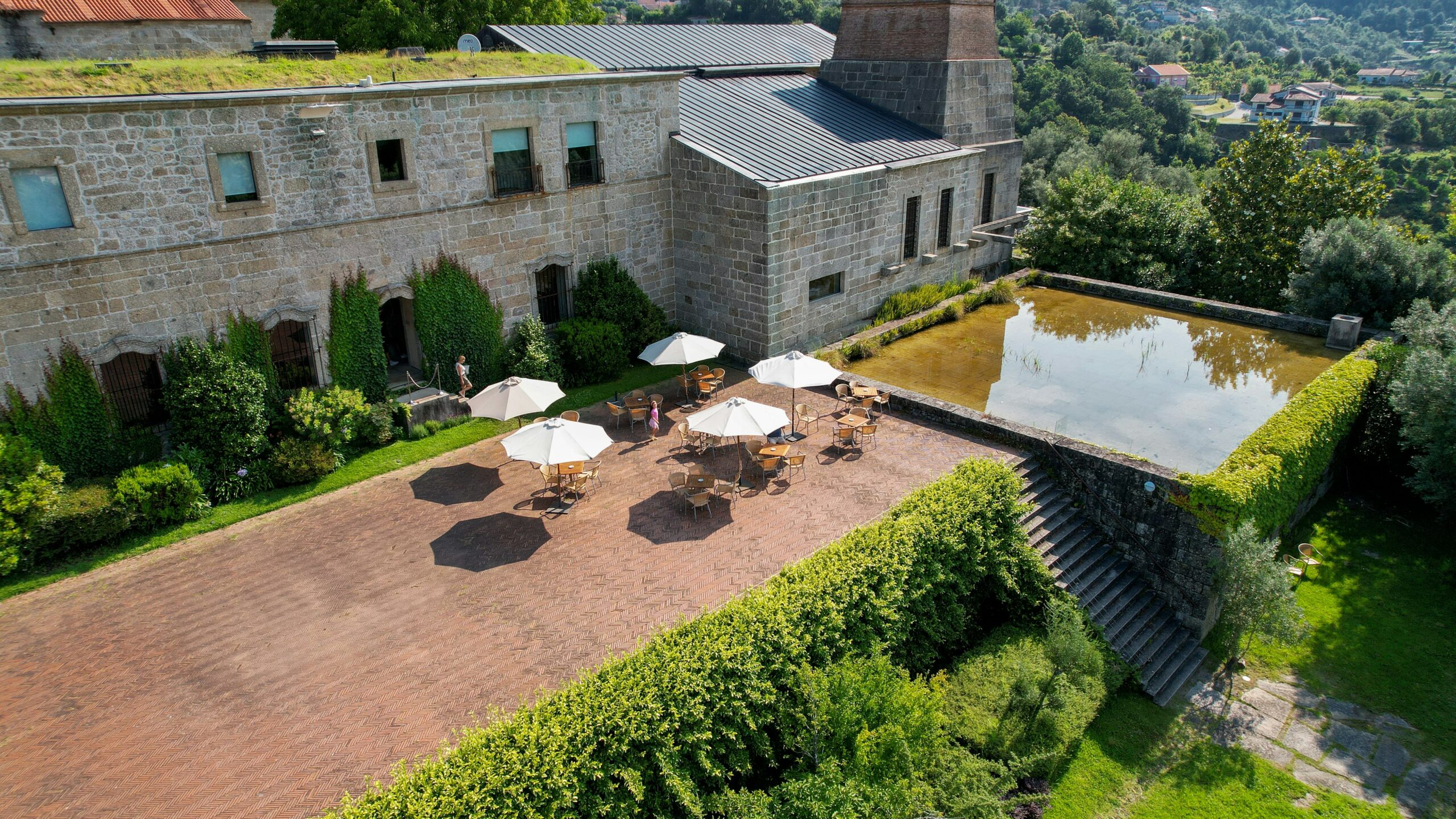
Lagos gets the obvious attention. Tavira is for people who look further. A historic bridge spans the River Gilão, whitewashed houses are topped with traditional telhados de tesoura, and the pace is noticeably slower than in the central Algarve. The Pousada Convento Tavira, a converted 16th-century Augustinian convent, is one of the most atmospheric places to stay in the entire region. From Tavira, you can catch a ferry to the barrier island of Ilha de Tavira, whose beach extends for kilometers in near solitude.
Carvoeiro and Ferragudo
Carvoeiro is the classic Algarve village: a tiny cove beach flanked by whitewashed houses, excellent restaurants, and proximity to some of the coast’s best walks (the Algar Seco boardwalk is spectacular at sunset). Ferragudo, just across the river from Portimão, retains a fishing-village character that’s increasingly rare on the central coast. The Pestana Carvoeiro Golf – AL puts you right in the heart of this area.
Vilamoura
Vilamoura is the Algarve’s most polished resort area: a purpose-built marina ringed by restaurants, nightlife, and some of the best golf courses in Europe. It’s slick and well-organized, though it lacks the authentic village character of Lagos or Tavira. If your priority is proximity to championship golf (Vilamoura has five 18-hole courses within a few kilometers), this is where you should base yourself.
Michelin Stars and the Best Seafood You’ll Eat This Summer
The Algarve’s food scene has changed significantly over the past decade. The region now holds several Michelin stars across its restaurants, including two two-star establishments: Vila Joya in Albufeira and Ocean at Vila Vita Parc in Porches. The newest addition is Alameda in Faro, led by chef Rui Sequeira, who earned his first star in the 2026 Michelin Guide for contemporary cuisine rooted in Algarve ingredients like Ria Formosa oysters, Tavira tuna, and seasonal vegetables from small local producers.
But you don’t need a tasting menu to eat extraordinarily well. The more honest Algarve meal is the cataplana, a copper-domed dish that slow-steams shellfish, pork, or fish with tomatoes, garlic, and white wine. Order it at a seaside restaurant with a view, split a bottle of Algarve wine from a local producer in Lagoa or Silves, and you’ll understand why people come back year after year. Grilled sardines are best in June and July, when they’re at their fattest. Arroz de marisco and fresh oysters from the Ria Formosa are both worth ordering.
| Restaurant | Location | Stars | Chef | Style |
| Vila Joya | Albufeira | ⭐⭐ | Dieter Koschina | Seasonal, Atlantic-focused |
| Ocean | Porches | ⭐⭐ | Hans Neuner | Creative, sea-inspired |
| Bon Bon | Carvoeiro | ⭐ | José Lopes | Local ingredients, inventive |
| Vista | Portimão | ⭐ | João Oliveira | Modern Portuguese |
| Alameda | Faro | ⭐ | Rui Sequeira | Contemporary Algarvian |
| São Gabriel | Almancil | ⭐ | Leonel Pereira | Creative Portuguese |
Source: Michelin Guide Portugal 2026.
Where to Stay: Choosing the Right Base
The Algarve is compact enough that you can stay in one place and day-trip to any beach or town within an hour’s drive. But choosing the right base makes a significant difference to the quality of your trip. Here’s how to think about it.
| Traveler Type | Best Base | Pestana Pick |
| Families | Alvor: wide beaches, shallow water, easy dining options, and good infrastructure for kids. | Pestana Alvor South Beach or Pestana Dom João II |
| Couples | Tavira: walkable old towns, excellent restaurants, romantic atmosphere without resort-style anonymity. | Pousada Convento Tavira |
| Golfers | Vilamoura: five championship courses within minutes, plus a marina for post-round dining. | Pestana Vila Sol – Vilamoura |
| Adventure seekers | Sagres or the west coast: surf, hiking the Rota Vicentina, kayaking to sea caves. | Pousada Sagres |
| All-inclusive | Central Algarve: convenient access to multiple beaches and attractions with minimal planning. | Pestana Blue Alvor Beach |
For a full overview of the Algarve hotel portfolio, the Pestana Algarve destination page lists every property with direct booking. Members of the Pestana Guest Club get exclusive rates and room upgrades when available.
What to Do Beyond the Beach
The beaches are the main event, but limiting yourself to sand and sunscreen means missing half the experience.
Golf
Portugal is regularly voted Europe’s best golf destination, and the Algarve is the reason. Over 40 courses are packed into this relatively compact region, from links-style coastal layouts to parkland designs carved through pine and carob trees. Vilamoura’s Old Course, designed by Frank Pennink in 1969, is a classic. The Pestana Gramacho Residences in Carvoeiro sit directly on the Gramacho golf course, making them an obvious choice for golfers who want to roll out of bed and onto the fairway. For more on golfing across Portugal, see the Pestana Stories golf guide.
Hiking the Rota Vicentina and the Seven Hanging Valleys Trail
The Rota Vicentina is a network of over 450 km of marked trails along the southwest coast, divided between the Fishermen’s Trail (coastal, dramatic, often vertiginous) and the Historical Way (inland, through cork oak forests and rural villages). If you only have time for one walk, the Seven Hanging Valleys Trail between Marinha and Vale Centanes is the one: roughly 5.7 km one way along cliff tops, past sea stacks and hidden coves, with the Benagil cave roughly at the halfway point.
Ria Formosa Natural Park
The Ria Formosa is a protected lagoon system that stretches 60 km along the eastern Algarve coast, sheltering barrier islands, salt marshes, and a notable variety of birdlife (including one of Europe’s few wild populations of purple gallinule). Take a boat tour from Olhão or Faro to the islands of Culatra or Armona, where you’ll find long, empty beaches and a handful of fishermen’s houses. The contrast with the resort coast is complete.
Wine Tasting
Algarve wine doesn’t get the international recognition of Douro or Alentejo, but that’s changing. The region’s warm climate and limestone soils produce increasingly refined whites and rosés, and producers like Quinta dos Vales in Lagoa offer tastings and cellar tours. Pair a wine tour with lunch at one of the traditional restaurants in Silves, the Algarve’s former Moorish capital.
Getting There and Getting Around
Faro Airport (FAO) is the Algarve’s main gateway, with direct flights from most major European cities, including London, Paris, Frankfurt, Amsterdam, and Dublin. From North America, connections through Lisbon (a 2.5-hour drive or 40-minute domestic flight from Faro) are the most common route.
Once you arrive, renting a car is strongly recommended. Distances between towns are short (Lagos to Tavira is about 100 km, roughly 75 minutes), but public transport is limited and won’t get you to the best beaches. A car gives you the freedom to explore the west coast, the interior hill towns like Silves and Monchique, and the eastern Algarve around Tavira and the Ria Formosa.
If you’re coming from Lisbon and prefer to make the journey part of the trip, the Algarve road trip guide on Pestana Stories maps out a multi-day route through the western Algarve.
The Price Argument: Why the Algarve Outperforms on Value
The Algarve costs less than most comparable southern European beach destinations. Portugal consistently ranks as one of the most affordable Eurozone countries for summer holidays in European travel cost indices, with prices roughly 25% lower than Spain’s Costa del Sol and significantly cheaper than the Balearic Islands, Sardinia, or the French Riviera.
A solid restaurant meal with wine runs €15-€30 per person. A two-scoop ice cream at a beachfront shop is €2.50-€3.50. A half-day kayak tour to the Benagil cave costs around €35-€45.
For the best hotel rates, book directly through pestana.com or check current summer promotions, including all-inclusive packages that bundle meals, drinks, and activities at a fixed rate.
Safety, Language, and Practical Details
Portugal consistently ranks among the top five safest countries in the world according to the Global Peace Index. English is widely spoken throughout the Algarve, particularly in tourist-facing businesses. The euro is the currency, and contactless payment is accepted virtually everywhere.
A few things worth knowing:
- Sunscreen is essential from mid-morning onward, even on cloudy days. The UV index in the Algarve routinely reaches 9-10 in July and August.
- Beach lifeguards operate from June through September on flagged beaches. Swim between the flags; Atlantic currents can be surprisingly strong, especially on the west coast.
- Parking near popular beaches fills up by mid-morning in high season. Arrive early or consider staying at a property with beach access, like the Pestana Alvor Praia, which sits directly above a cliff-edge beach.
- Water is safe to drink from the tap, though most restaurants will offer bottled water.
- Tipping is appreciated but not obligatory. Rounding up or leaving 5-10% is standard practice.
Your Algarve Summer Starts Here
The Algarve doesn’t need superlatives. It needs a plan. Choose your base, book your hotel, rent a car, and give yourself enough days to explore beyond the obvious. Whether you spend your mornings hiking cliff trails and your evenings eating cataplana by the harbor, or you park yourself at a beachfront resort and don’t move for a week, the result is the same: this is one of the best summer destinations in Europe, and it has been for a long time.
Frequently Asked Questions
June and September offer the best balance of warm weather, 27°C (80°F) average, manageable crowds, and lower prices. July and August are hotter and busier, but if you’re traveling with school-age children, these are your only options. Book accommodation early for peak months.
It depends on what you prioritize. The Algarve is more affordable, easier to navigate by car, and has a stronger fine-dining scene (seven Michelin stars vs. three in all of the Greek islands combined). The Greek islands offer more variety of island-hopping and warmer sea temperatures. For families and golfers, the Algarve consistently wins.
A minimum of five days gives you enough time to explore the central coast, visit Lagos and Tavira, and take a day trip to the west coast or Ria Formosa. A full week allows for a more relaxed pace and time for golf, wine tasting, or a hike along the Rota Vicentina. Ten days is ideal if you want to combine beach time with cultural exploration.
Yes. The central Algarve, particularly Alvor and Albufeira, has wide, shallow-water beaches, family-friendly restaurants, and excellent hotel infrastructure. Several Pestana properties offer kids’ clubs and family suites. Portugal is also one of the safest countries in Europe, which gives parents real peace of mind.
A cataplana is a traditional Algarvian dish cooked in a hinged copper pot that seals in steam. The classic version combines clams, shrimp, and chouriço with tomatoes, garlic, and white wine. You’ll find it at most seafood restaurants along the coast. For a particularly good version, try the restaurants around the fishing port of Olhão or the traditional establishments in Alvor.
Yes, a rental car is strongly recommended. While there are bus services between the main towns, they don’t serve the best beaches or the west coast effectively. Distances are short (the entire Algarve coast is about 200 km), and having a car opens up the interior towns, golf courses, and wild beaches that public transport can’t reach.