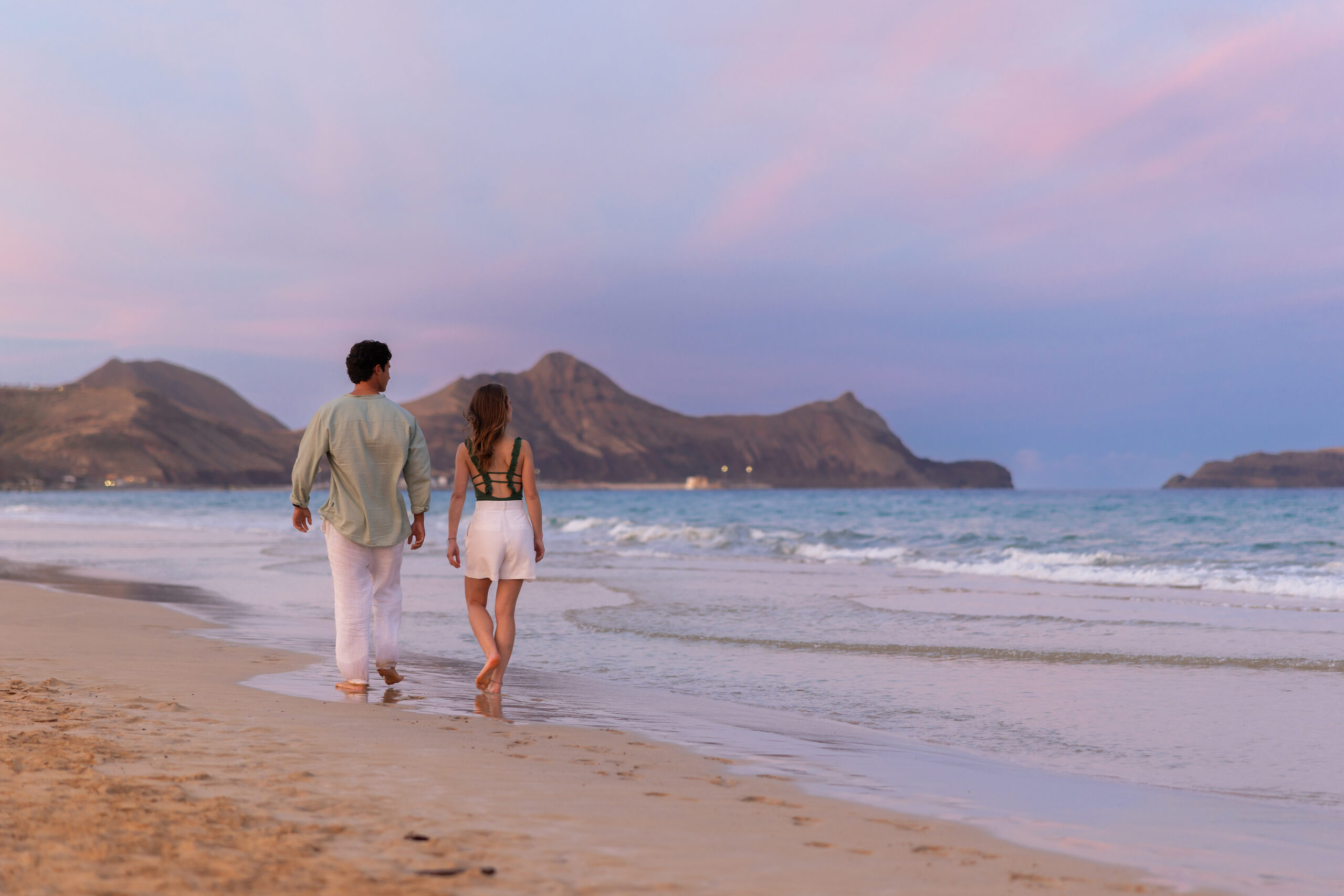
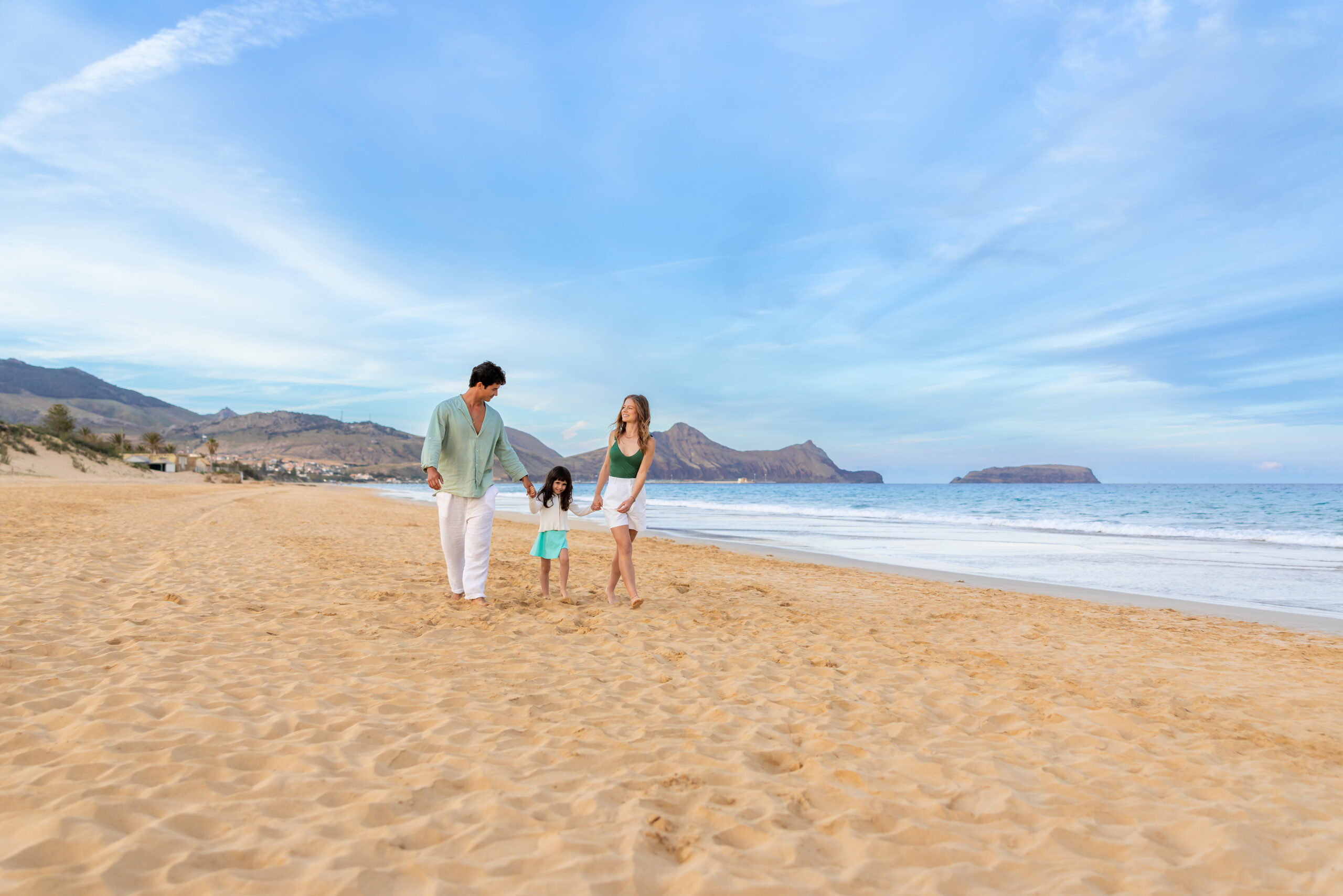

There's a Portuguese beach with nearly 9 kilometres of fine golden sand, warm water straight out of a postcard, and it's just over two hours by boat from Madeira. It's called Porto Santo, and it's exactly why people call it the golden island: you go there, above all, to do nothing but beach.
It’s the Atlantic, European answer for anyone dreaming of a destination with golden sand and warm weather on the other side of the world, but without actually crossing the ocean to find it. Porto Santo has the shoreline, has sunshine almost year-round, and has something else that’s rare: a sand with a therapeutic reputation, used for generations in warm sand baths to ease bone and rheumatic pain.
This guide covers everything you need to plan the trip: why the golden beach is one of a kind, what the sand bath tradition is all about, how to reach the island (by boat or by plane), where to stay right on the beach, and what to do when you want to get off the towel. At the end, we answer the most common questions from first-time visitors to Porto Santo.
Porto Santo at a glance
Where it is: in the Madeira archipelago, to the northeast of the main island.
Beach: just one, unbroken, stretching around 9 km of fine golden sand, calm water and a gentle slope into the sea.
How to get there: ferry from Funchal (around 2h30) or a short flight (around 25 min), or a direct flight from Lisbon (around 1h50).
Climate: warm and dry, with a long beach season running from late spring to early autumn.
Where to stay: two Pestana resorts on an all-inclusive basis in Campo de Baixo, right on the beach.
Why is Porto Santo the Atlantic’s golden beach?
Porto Santo’s beach is, unlike almost every other, a single continuous stretch. It runs along nearly the entire southern coast of the island – around 9 kilometres of fine, golden sand that’s soft underfoot, leading gently into clear, calm water. That slow, gradual entry into the sea, with no steps or rocks, is what makes it so safe for families with children. The beach also holds the Blue Flag award, the international standard for bathing and environmental quality.
Anyone who knows Madeira will notice the contrast straight away. The main island is green, damp, full of cliffs and pebbles, built for walking the levadas; Porto Santo is flat, dry and bright, built for laying out a towel. They don’t compete, they complement each other: plenty of travellers combine both on the same trip, as we suggest in our Discovering Madeira: the top 10 and the Madeira destination guide. We explore the golden island in depth in Discovering Porto Santo, and count it among our favourite island paradises.
The sand that soothes: the tradition of warm sand baths
What really sets Porto Santo apart doesn’t show up in a photograph: it’s the sand. Psammotherapy, the practice of burying the body in hot sand to ease rheumatic and joint pain, has been part of the island’s identity for generations. The local sand is rich in calcium carbonate and other minerals, and there are people who plan their whole stay around the mid-morning sand baths, when the beach has warmed up but the sun isn’t yet at its fiercest. It’s not a medical promise – it’s a tradition with devoted followers, and one more reason the island draws people looking for rest and wellbeing. The official Visit Madeira portal has more background on the island and its beach culture.
How to get to Porto Santo: by boat or by plane?
There are several ways to reach the golden island. From Madeira, the regular service operated by Porto Santo Line between Funchal and Porto Santo takes around two hours and fifteen minutes and is, in itself, a trip worth taking for the open-sea views. By plane, the flight between Funchal and Porto Santo lasts around fifteen minutes – the fastest option for those arriving from far away who don’t want to lose time.
Travelling from Lisbon, there are direct flights to Porto Santo taking around 1h50. Alternatively, you can fly to Madeira and then continue to Porto Santo by plane or ferry.
The table below sums up the options:
| How to get there | Approximate duration | Departs from | Good for |
| Ferry (Porto Santo Line) | Around 2h30 | Funchal Harbour | Travelling with a car, crossing by day and enjoying the sea |
| Plane | Around 25 min | Madeira Airport (Funchal) | Arriving from abroad and wanting to make the most of beach days |
| Plane | Around 1h50 | Lisbon Airport | Anyone who wants a direct trip straight to Porto Santo |
Whichever option you go for, it’s worth combining the golden island with a few days on Madeira. We bring both destinations together in the Pestana Stories Madeira hub, with ideas for balancing beach, nature and city on the same trip.
Where to stay in Porto Santo: two resorts right on the golden beach
The Pestana Group’s two resorts in Porto Santo are both in Campo de Baixo, right on the same golden beach, and both operate on an all inclusive basis – which fits perfectly on an island made for switching off and not worrying about the bill at the end of the day. The difference is in what each one offers.
The Pestana Porto Santo is the classic beach resort, with direct access to the sand and food, drink and activities all included in the all inclusive package. It’s the choice for anyone who wants the full beach holiday deal, and it ranks among the best of its kind in Europe – as we explain in Six reasons why this is one of Europe’s best all-inclusive hotels (see the hotel).
Next door, the Pestana Dunas Porto Santo is the group’s most recent investment on the island: a villa eco-resort designed to blend into the dunes landscape, with a strong sustainability focus and the same beach access. We told the story of this property in An all-inclusive seaside eco-resort (see the hotel). You can compare both options in the Porto Santo destination guide.
| Resort | Concept | Board basis | Beach | Best for |
| Pestana Porto Santo | Classic beach resort | All inclusive | Direct access | Families and full beach holidays |
| Pestana Dunas Porto Santo | Villa eco-resort | All inclusive | By the dunes | Families who value sustainability and peace and quiet |
What to do in Porto Santo beyond the beach
Even on an island built for doing nothing, there’s more than sand. Here are five stops worth fitting in between dips, each one showing a side of Porto Santo with its own history and landscape.
- Casa Museu Cristóvão Colombo, in Vila Baleira. The navigator lived in Porto Santo, and this museum in the village tells that story, in a whitewashed house full of history.
- Pico do Castelo and Pico Ana Ferreira. The island’s highest viewpoints, with views over the entire golden beach and, on clear days, Madeira in the distance.
- Fonte da Areia. A sandstone formation carved by wind and water in the north of the island, and one of the most photographed spots in Porto Santo.
- Porto Santo Golfe. A course designed by Severiano Ballesteros, with holes perched above cliffs and sea – for those who like to combine golf with the beach.
- Boat trip around the island. The best way to see the wilder, more jagged northern coast, which you can’t reach on foot.
When is the best time to visit Porto Santo?
Porto Santo has a warm, dry climate and one of the longest beach seasons in the country, running from late spring through to early autumn. July and August are the peak, with more sun, more going on, and the sea at its mildest – ideal for travelling with children. Those who prefer the beach with more space can look at June or September, still warm but with fewer people on the sand. Being a flat, sun-drenched island, it offers reliable beach days long after much of mainland Portugal has cooled down.
Frequently asked questions about Porto Santo
Porto Santo beach is one continuous stretch of about 9 kilometres of fine golden sand along the island’s southern coast, with calm water and a gentle slope that makes it safe for families.
By sea, the regular ferry from Funchal operated by Porto Santo Line takes around two hours and fifteen minutes. By air, the flight between Funchal and Porto Santo takes about fifteen minutes.
The sand is rich in calcium carbonate and minerals, and the local tradition of hot sand baths – psammotherapy – has been used for generations to ease rheumatic and joint pain. It’s not a medical claim, but it’s a custom with a loyal following on the island.
Yes. Summer is when the golden island is at its best, with warm dry weather and the sea at its mildest. It’s drier and sunnier than Madeira and ideal for a beach holiday, especially with children.
Yes. The Pestana Porto Santo and the Pestana Dunas Porto Santo both operate on an all inclusive basis, both in Campo de Baixo, right by the golden beach. The first is a classic beach resort; the second, a villa eco-resort.
To enjoy the beach without rushing, three to four nights is a good starting point. Anyone wanting to combine it with Madeira on the same trip should allow at least a week, split between the two islands.