
There is a stretch of Portuguese coast where apartment blocks give way to low-rise houses, tarmac gives way to roads threading through rice paddies and pine forests, and the beach stretches for kilometres of near-empty sand.
It runs south of Lisbon, from the shoreline of Comporta to the peninsula of Tróia and on to the fishing village of Porto Covo. This is the Alentejo coast, and it is the quiet opposite of a summer spent fighting for space elsewhere.
Those after a beach without the crowds, proper nature and a slower pace will find all of that here, less than two hours from the capital. No concrete seafronts, no heaving nightclubs: just storks perched on rice field poles, dolphins in the Sado estuary and clifftop walking trails. It is an Alentejo that faces the sea.This guide covers the three main bases along the Alentejo coast, what makes each one tick, which beaches to head for and where to sleep by the water. At the end, we answer the questions most commonly asked by those swapping the summer chaos for this quieter corner.
The Alentejo coast at a glance
Where it is: on the Alentejo coastline, south of Lisbon and the Setúbal peninsula.
Three bases: Comporta (rice paddies and dune beaches), Tróia (a peninsula between the Sado and the Atlantic) and Porto Covo (a fishing village and the Rota Vicentina).
What defines it: low-rise buildings, protected nature, wide beaches and few people, even in summer.
Good for: those escaping the crowds, families, and anyone wanting to mix beach, walking and peace and quiet.
Why is the Alentejo coast different from the rest of the Portuguese shoreline?
You notice the difference as soon as you arrive. Much of this coastline falls within protected areas, which kept building heights down and preserved a landscape you rarely see: dunes, stone pine forest, cork oaks and, around Comporta, hectares of rice paddies that shift colour through the seasons. The beaches are vast and pale-sanded, reached by wooden boardwalks rather than promenades. The result is a stretch of coast where you hear the sea and the birds before you hear any traffic.
It is also a destination that rewards a slow approach: cycling between the fields and the beach, long lunches of fresh fish, late afternoons watching the sun drop into the water. For an overview of the region and help planning the rest of your trip, the official Visit Alentejo portal is a good starting point, and the group’s offering is brought together in the Alentejo destination guide.
Comporta: rice paddies, storks and dune beaches
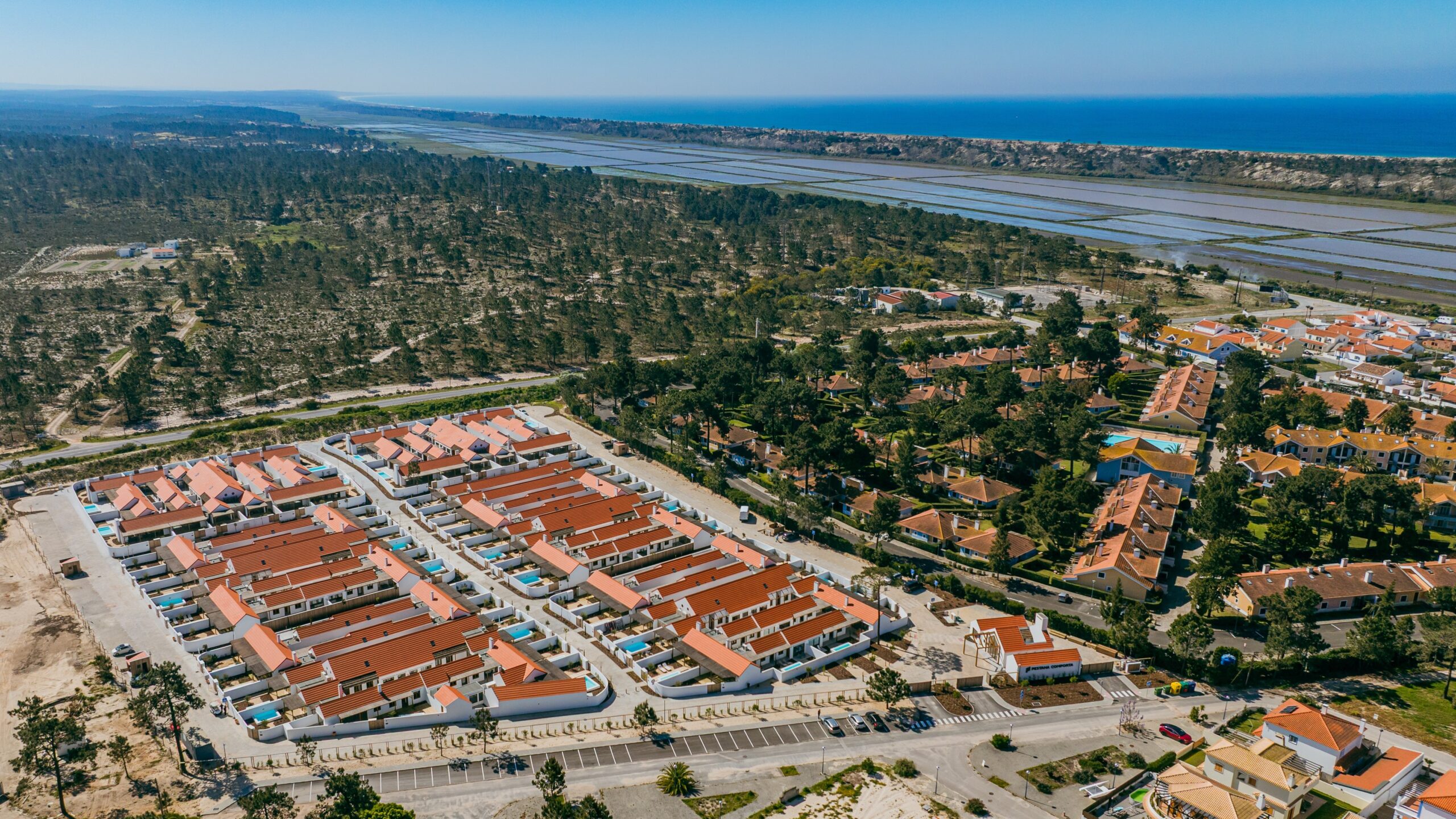
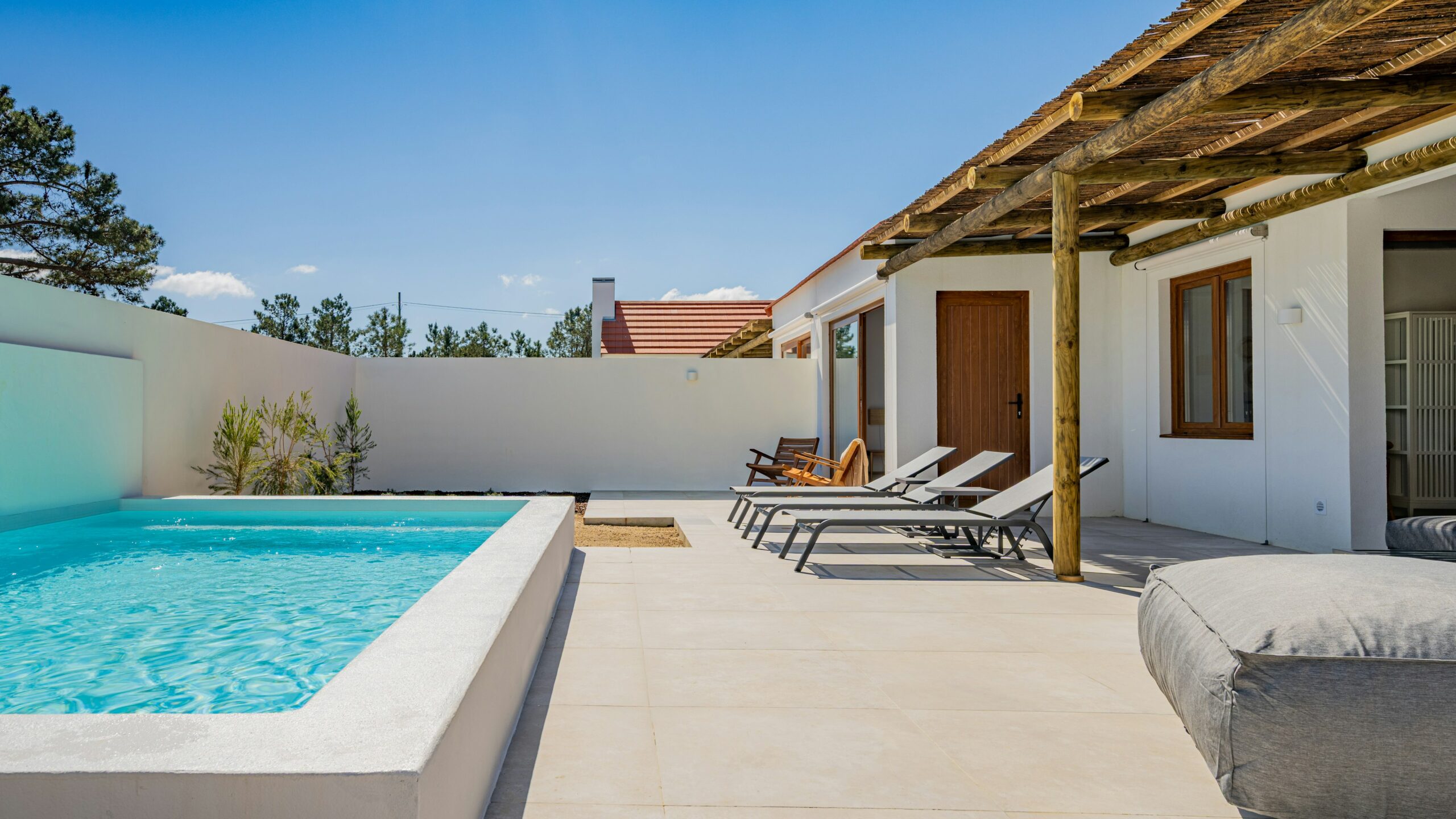
Comporta is the name that put this coast on the map, and it has stayed true to itself: whitewashed low houses, thatched roofs, rice paddies lining the road and storks nesting on the telegraph poles. The beaches, from Comporta to Pego and Carvalhal, are wide, with fine sand and open water, the dunes and the pine forests keeping the noise at bay. This is a place to slow down, not to fill a diary.For staying right in the heart of the area, the
Pestana Comporta Village Residences offers accommodation in a village-style setting, close to the beach and the rice paddies. We looked at the quieter side of this destination in Comporta: the intimate version, for anyone wanting to understand why so many people come back every summer.
Tróia: the peninsula between the Sado estuary and the sea
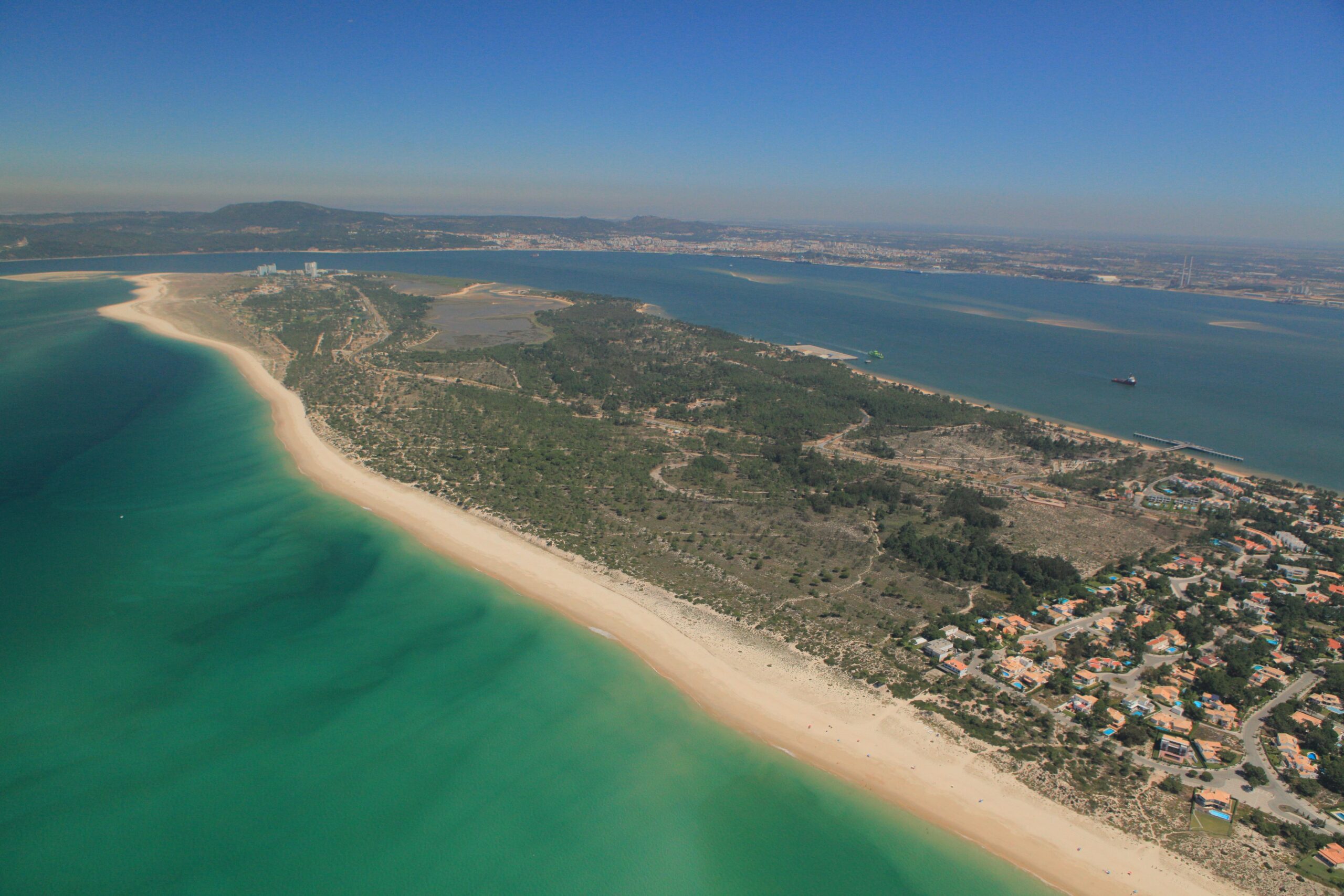
Just across from Setúbal, reached by a short boat trip, the peninsula of Tróia is a tongue of sand between the Sado estuary and the Atlantic. On one side are golden beaches, on the other the calm waters of the estuary, and it holds two things that few beach destinations can offer.
The first is dolphins: the Sado estuary is home to one of the only resident populations of bottlenose dolphins in Europe, and they can be spotted on boat trips from the shore. The second is history: the Roman Ruins of Tróia were one of the largest garum production centres in the entire Empire, and you can still visit them right by the river. For combining beach, nature and history in a single stay, the Pestana Tróia Eco-Resort sits at the tip of the peninsula, facing the sea.
To discover this hidden gem between the Sado Estuary and the Atlantic, watch the video through the eyes of content creator @pedrito.paleao:
Porto Covo: a fishing village and the gateway to the Rota Vicentina
Further south, Porto Covo is the postcard image of the wilder Alentejo coast: a fishing village of white-and-blue houses perched above small sandy coves tucked between cliffs. Offshore sits the Ilha do Pessegueiro, with its fort, and from here the Trilho dos Pescadores sets off along the cliff tops, the coastal variant of the Rota Vicentina postal da costa alentejana mais selvagem: uma aldeia de pescadores de casas brancas e azuis, debruçada sobre pequenas enseadas de areia entre arribas. Ao largo fica a Ilha do Pessegueiro, com o seu forte, e a partir daqui parte o Trilho dos Pescadores, a variante junto ao mar da Rota Vicentina, one of the most beautiful walking trails in the country.
It’s a destination that rewards those who love the beach: mornings on the sand, afternoons on the clifftop trail along the falesia, and at the end of the day fresh grilled fish in the village. To sleep just steps from all of this, Pestana Porto Covo Village is the natural base. We’ve already called it the next big summer destination in Porto Covo, the next holiday hotspot in Portugal.
| Base | Character | Beaches | Ideal for |
| Comporta | Rice fields, pine forest and thatched village | Comporta, Pego, Carvalhal | Calm, families, slow days |
| Tróia | Peninsula between the Sado and the Atlantic | Tróia-Mar, Galé, calm estuary | Beach, dolphins and Roman history |
| Porto Covo | Fishing village above the cliffs | Praia Grande, Pessegueiro | Beach with Rota Vicentina trails |
When is the best time to visit the Alentejo coast?
July and August are peak seasons, with calmer seas and all the beach facilities open, but the great thing about this coast is that it rarely gets crowded enough to feel overwhelming. June and September are almost perfect: plenty of warmth, more space on the beaches and easier prices. Even outside of summer, the region is worth the trip, with sunny days and empty landscapes, as we showed in From Troia to Comporta: the winter escape that doesn’t need crowds. The one constant to factor in is the afternoon wind – the nortada – which cools the more exposed stretches of sand, though you can work around it by choosing more sheltered beaches.
Frequently asked questions about the Alentejo coast
It’s the strip of coastline in the Alentejo south of Lisbon, running from Comporta and the Tróia peninsula, near the Sado estuary, down to Porto Covo and the Costa Vicentina further south. All of it is less than two hours from the capital.
Comporta has low-rise buildings, wide dune beaches and few people, with a rural, rice-field feel. It’s a quieter, nature-focused destination without the urban density and nightlife of the Algarve coast.
You can reach Tróia by car via the A2 and through the Alentejo, or by boat from Setúbal – a short crossing over the Sado estuary that is, in itself, a scenic little trip.
Yes. Porto Covo combines beach and trails: the sand and small coves in the morning, and the Trilho dos Pescadores on the Rota Vicentina, right along the cliff edge, as the day winds down. It’s one of the most sought-after summer destinations on the Alentejo coast.
It depends on the pace you’re after: the Pestana Comporta Village Residences for the peace of the rice fields; Pestana Tróia Eco-Resort for beach at the tip of the peninsula; and Pestana Porto Covo Village for those who want beach and trails right next to the village