
Take a full weekend to explore the city of seven hills. Such a short space of time won’t give you the full picture of Lisbon - but it’s certainly long enough to win you over and leave you wanting to return.
Day 1 – up and down in the historic quarter
Lisbon is best discovered on foot, especially in the old neighborhoods. Between Alfama, Sé and Castelo, stroll around with no set map, guided by the narrow streets and viewpoints that seem to emerge by chance. Follow the rails of the 28 tram, always up the hill, taking detours that take your fancy. Saint George Castle is, inevitably, one of those unmissable spots.
A stop at the Santa Luzia viewpoint offers some context: the river, the roofs, the sound of the trams passing by. Right there, with a view of that part of the city, it’s a good time for breakfast at Manifesto, at the Pousada Alfama. Set in a peaceful spot with a retro vibe, it’s the right place to see the city awake.
Mid-morning, it’s worth avoiding the predictable sights, and swing by the Fado Museum – one way of immersing yourself in the roots of the music and the city and understand the connection between the two. Next up is Baixa: Praça do Comércio, Rua Augusta and the constant to-ing and fro-ing of the city. Along the way, pop into the MUDE – Design Museum and add a contemporaneous and unexpected side to your tour. This Museum features exhibitions that change regularly and the refurbished building itself is worth seeing.
Come afternoon, it’s time to discover the Chiado and Príncipe Real quarters, with their bookshops, historical cafés and hidden gardens. Príncipe Real Garden is perfect for a rest between walks, far from the hubbub. With a bit of luck, there’s live music – bossa nova fans, this is your place. At the end of the day, Bairro Alto begins its transformation – even if you’re not staying long, feeling that change is part of the Lisbon experience.
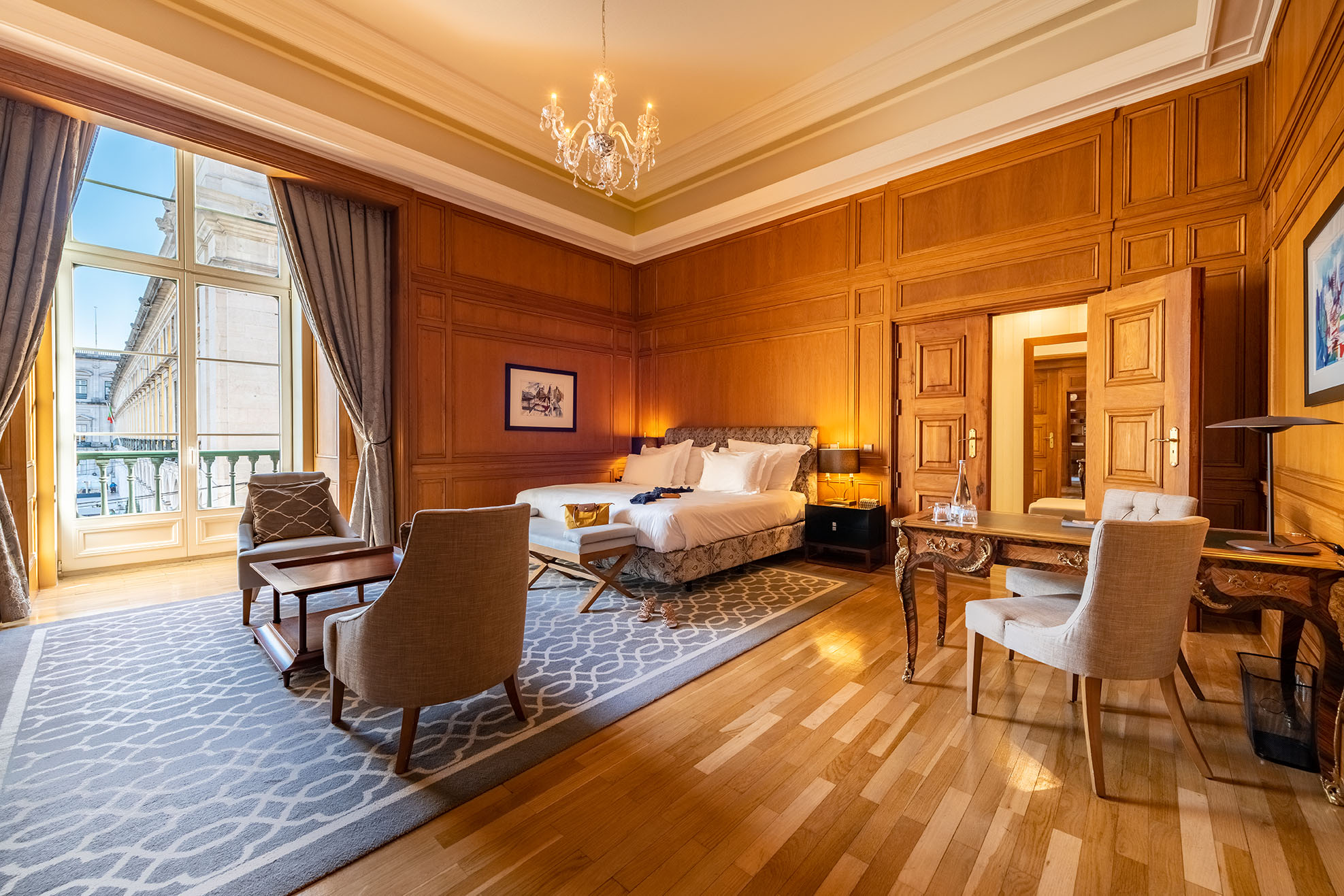
Descending to Terreiro do Paço, dinner at Rib Beef & Wine is the best way to finish your first day. Overlooking the magnificent Praça do Comércio square, the cuisine of the Pousada Lisboa restaurant focuses on the finest meat, not to mention a fine wine selection and an elegant but relaxed atmosphere. It’s a meal to be savored, with no rush to leave. The best historical 4 and 5-star hotels in Lisbon are found near.
Day 2 – the river and the contemporary
After a first day spent in the historic centre, the second requires space, light and a more direct connection to the river. Visiting Belém remains a must, but it’s worth going beyond the well-worn routes. The Jerónimos Monastery is impressive due to its scale and detail; however, the contrast is found next door, at the Museum of Art, Architecture and Technology (MAAT). Between temporary exhibitions and the chance to climb up to the rooftop to observe the river Tagus from above, this is one of the best places to experience a more contemporary Lisbon. A stone’s throw away, there’s a ritual that continues to make sense: Pastéis de Belém, a custard tart served warm, sprinkled with cinnamon, which deservedly maintains its status as a classic.
In the afternoon, it’s time for less obvious options. For those who enjoy greenery and broad views, Tapada da Ajuda offers peaceful trails and an almost rural side within the city, ideal to end the day away from the hustle and bustle. An interesting and nearby alternative is the Ajuda National Palace, one of the most prestigious Portuguese royal residences, that opulently reveals the daily life of the monarchy in the 19th century.
The second day ends unhurriedly, with the distinct feeling that Lisbon reveals itself piece by piece – amongst hills, museums and restful moments by the water. The walk along the river front, from Belém to Cais do Sodré, is long, with various vistas, which help you slow down and connect the two days of the trip. Lisbon gains sense – and requires a return visit.